From Tape Runs on Wardour Street to the Boardrooms of Riyadh
On growing up between two worlds, and what that means for your next Arabic brief.
Some things in this industry you can put on a CV. Awards. Credits. Clients. Turnover.
The fix isn't a better translator. It's a producer who never needed one.
And then there are the things you can't. The ones that only exist because of where you were, who you were around, and what you absorbed before you even knew you were learning anything.
Those are the things that actually matter when a brief gets complicated.
I've spent my career sitting at the intersection of two worlds that don't naturally speak to each other, and making sure that when they need to, they do. Fluently. Warmly. Without anything getting lost.
This is how that happened.
Wardour Street Was My University
Before I had a title, before I had a company, before I had a single credit to my name, I had a bag, a pair of legs, and a route I could have walked blindfolded.
That's what tape runs gave you. A circuit through Soho, up Wardour, along Berners, over to Beak and back again, that put you inside some of the most extraordinary creative institutions in the world. Lipsync on Wardour. MPC a few doors down. RSA on Beak Street. Goldcrest over on Dean Street. The Bank on Berners. Post houses, edit suites, grading rooms, sound stages, all of it tucked above restaurants and below street level, all of it within ten minutes of each other, all of it quietly producing some of the best work on earth.
What nobody tells you about being the youngest person in those buildings is how much you actually see. You're invisible in the best possible way. Nobody performs for you. And so you watch everything, how a director talks to a DoP versus how he talks to a client. How trust moves between people who've worked together for years. How a room changes when something isn't working, and nobody wants to be the first to say so.
That world got into my bones before I even had the vocabulary to describe what I was learning. And it never left.
The Other Kitchen
At the same time, and this is the part that makes everything else make sense, Arabic was my first language.
The Gulf wasn't somewhere I discovered later in my career as a business opportunity. It was somewhere I already knew. The culture, the pace, the particular warmth of a room when trust is present, and the very specific atmosphere when it isn't.
And here's the thing about that. You can't learn it in a workshop. You can't read about it in a brief or pick it up from a cultural checklist someone emails you before a client meeting.
I've sat in enough rooms around the world to know that every culture has its own language running underneath the spoken one. In Japan, silence in a meeting isn't awkwardness; it's thinking, and the worst thing you can do is fill it. In Brazil, accepting the dinner invitation isn't optional socialising; that's where the real conversation happens, and the deal lives or dies at the table. With Americans, get to the numbers fast, personality is appreciated, but the room is waiting for the point. With Scandinavians, you can say almost anything, but overpromise once, and the trust is gone, quietly and permanently. Italians want to like you before they do business with you, rush the relationship, and you've already lost the contract.
With Arabs, the trust has to come first. Almost always. Before the brief, before the budget, before any of it. A client from Riyadh, Dubai, or Doha is reading the room long before you are, feeling whether you understand them, whether you respect them, whether you're genuinely present or just going through the motions. Get that right, and they'll back you completely. Get it wrong, and no amount of good work will fix it.
None of this is something I learned. It's something I accumulated across hundreds of productions, dozens of countries, years of being in rooms where the stakes were real, and the cultural intelligence had to be instinctive, not rehearsed.
That's the fluency that actually matters. And it moves in every direction at once.
What Happens When Both Worlds Meet in a Brief
The Gulf's biggest brands, telecoms, tourism authorities, automotive, and government are producing campaigns conceived in London, shot across the world, and delivered to Arabic-speaking audiences who will know immediately whether the people who made it truly understood them or not.
That instinct is finely tuned. It picks up on things no translation can fix. A tone that's technically correct but emotionally hollow. A piece of dialogue that sounds like it was written in English and put through a machine. An image that ticks every brief box but somehow feels like it was made for someone else.
The fix isn't a better translator. It's a producer who never needed one.
When I'm on a job, the creative brief gets read the way a London creative director reads it: strategy, integrated thinking, what the agency is genuinely trying to achieve, and why. And then the client conversation happens in Arabic. Not formal Arabic. The right Arabic, the kind where the client stops performing and starts actually talking. Where the real feedback surfaces. Where you find out not just what they love but what quietly bothers them, and you can actually do something about it before it becomes a problem in post.
That's where campaigns get made or lost. And it almost never shows up in a debrief.
The Calls You Can't Plan For
You learn a lot about where you stand in an industry from the calls that arrive when nobody needs anything.
I get them all the time. An EP I haven't spoken to in months. A creative director between projects. A producer I worked with years ago on something completely different. And the call usually sounds something like this:
"Karim. Someone just reached out, based in Qatar, name is X. Do you know him?"
Almost always, I do.
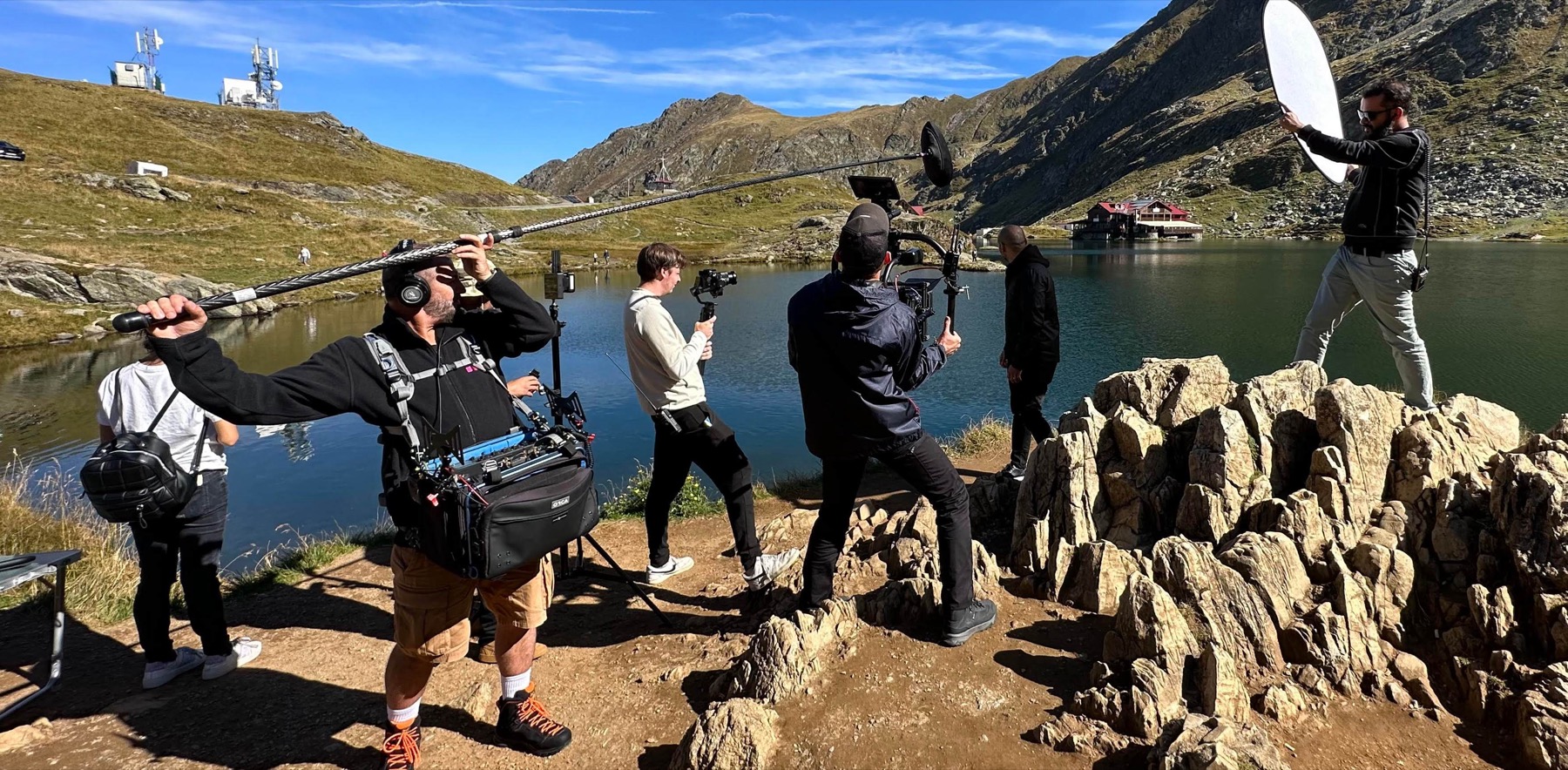
After decades of working across Saudi Arabia, Dubai, Qatar, and beyond, with clients including Mobily, STC, the Saudi Tourism Authority, Misk Foundation, and CNN Create, and simultaneously operating within London's production and agency world, the industry becomes a very small village. Names travel. Reputations travel faster.
Those calls are not about a specific project. They are the proof that something real exists, a network built across two geographies, two languages, and two cultures, over enough time that it moves on its own.
That's not something you can put together quickly. I know, because it took me everything I had.
What You're Actually Looking For
When a London agency has an Arabic brief, or a Gulf brand brings a campaign to the UK, the question underneath every other question is always the same one:
Is there someone who genuinely gets both sides of this?
Not someone who's done a few jobs in Dubai. Not someone with a local fixer and a good attitude. Someone who ran tapes down Wardour Street as a teenager and walked into their first client meeting in Riyadh speaking the language before they even had a business card.
That combination is rarer than people realise. When it exists, it changes what a production can be.
I've been lucky enough to build it from both ends. And if your next brief needs someone standing in the middle, that's exactly where I'll be.
Samurai Productions has been producing across the Gulf and EMEA since 2014. Hundreds of productions. Twenty-eight countries. Always fluent in both directions.
Got a brief that needs someone who understands both worlds? Write to info@samuraiproductions.com